Your Decision Runway: Why Waiting Is the Riskiest Choice You Can Make
Contents
At a demography and futures session this week, social researcher Mark McCrindle shared a statistic that’s easy to skim past: most people don’t choose to downsize, seek support, or move into a retirement village.
They’re pushed into it - by a fall, a hospital stay, a spouse’s health crisis, or a home that’s quietly become too much to manage alone.
It’s a pattern worth sitting with.
Because the moral isn’t really about villages or health services.
It’s about autonomy - and how easily we lose it when we wait for a crisis to make our decisions for us.
The Runway Gets Shorter Than You Think
Think of your decision-making ability like a runway. Early on, it’s long. You have time, choices, and energy to plan on your own terms. But every year you put off the health check, the mobility work, the conversation about what you actually want your next decade to look like, the runway gets a little shorter.
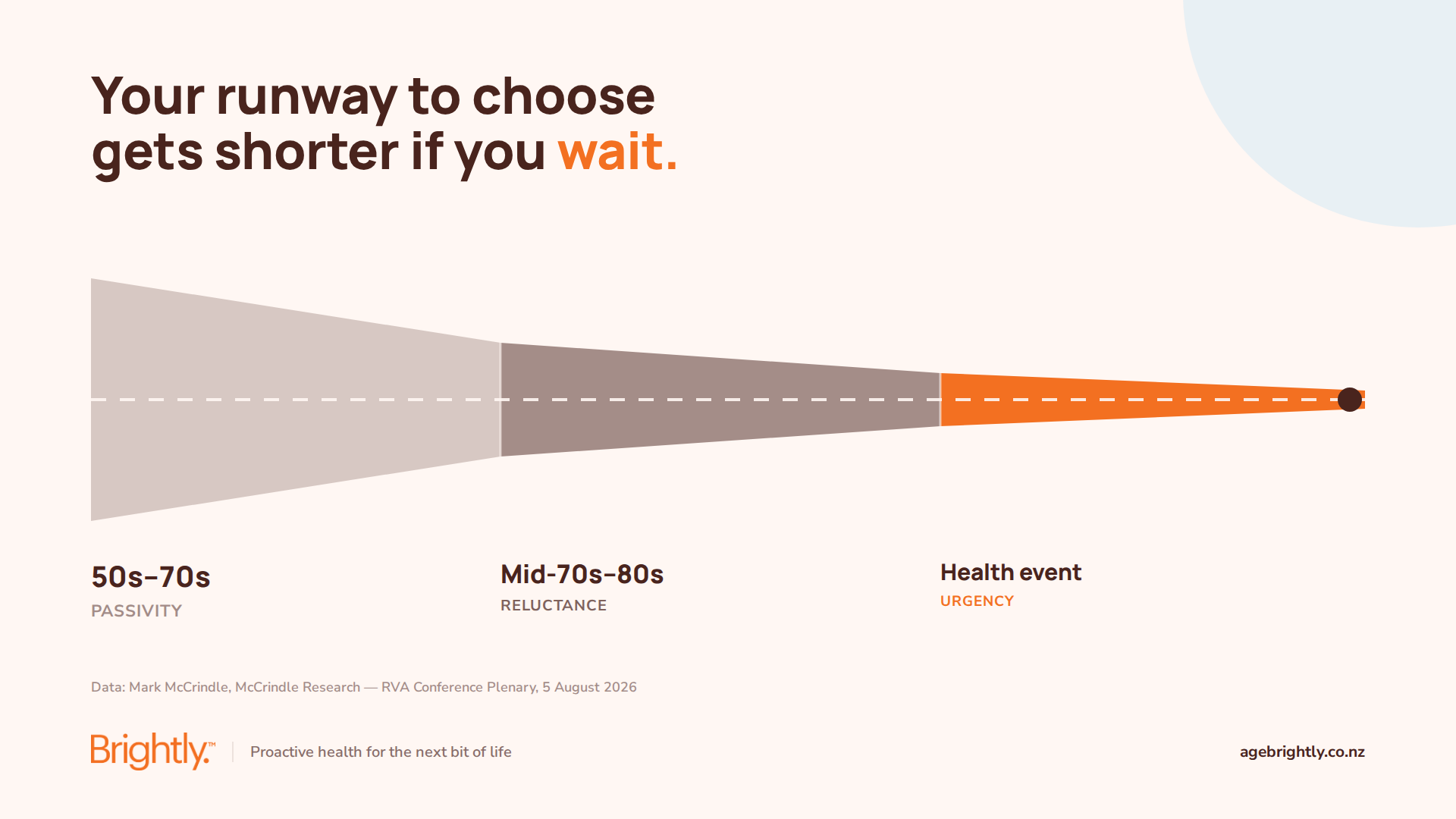
McCrindle’s research shows this plays out in real, measurable stages. In our 50s and 60s, we tend toward passivity - “I’ll deal with it later.” By our mid-70s to early 80s, that shifts to reluctance - the decision feels emotionally and financially loaded, so we avoid it. And then, for many people, a health event arrives and forces urgency. The decision gets made for you, on someone else’s timeline, with far fewer options on the table.
The good news: this isn’t inevitable. It’s a pattern, and patterns can be interrupted.
Pull Yourself Forward, Don’t Wait to Be Pushed
Here’s the reframe: instead of waiting for life to push you toward action, you can pull yourself toward a future you actually want.
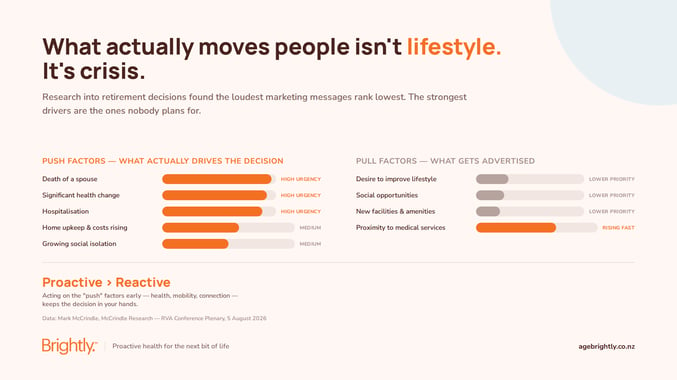
That’s not about giving anything up - it’s about protecting your independence for longer, by acting while you still have the most choices available to you.
That looks like ordinary, achievable things:
-
Getting a genuine baseline health check - not just when something feels wrong, but so you know where you stand now, while you can still act on what you learn.
-
Investing in strength, balance, and mobility before a fall makes the decision for you.
-
Having the conversation with family or your GP about what independence means to you, and what support would actually help - before a crisis forces a rushed one.
-
Staying proactive with the people who know your health history, so small changes get caught early, not after they’ve become emergencies.
The Takeaway
Inaction feels like the safe choice. It isn’t.
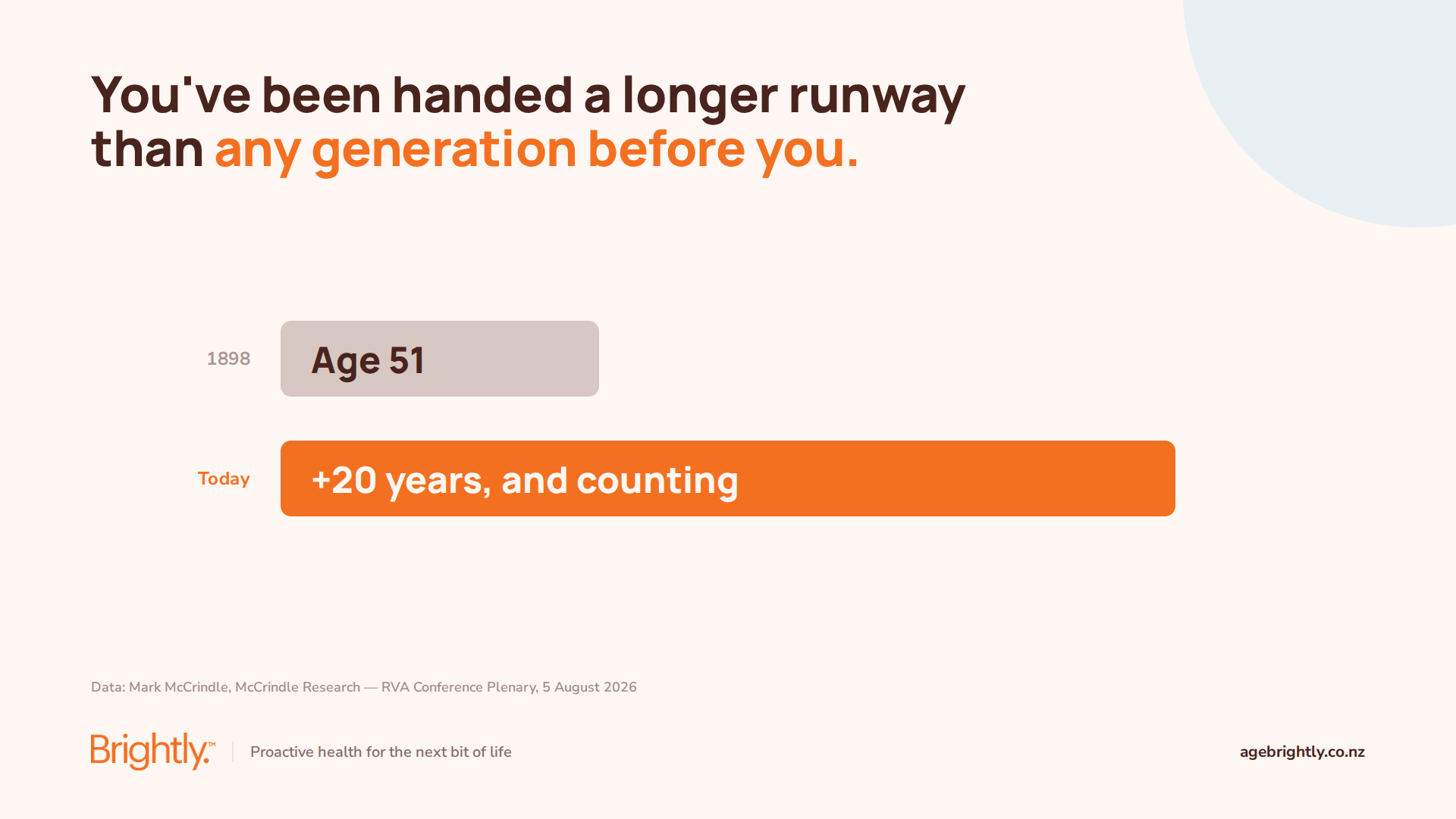
Every year you delay is a year taken off your own decision runway - and a year handed to circumstance instead. The people who stay most independent later in life aren’t the ones who avoided thinking about ageing. They’re the ones who started acting on it early, while the choices were still fully theirs to make.
Your future self doesn’t need you to have all the answers today. They just need you to start.
Ready to see where you stand? Book a Brightly Baseline+ Health Check and take the first step toward staying in the driver’s seat of your own health.