Not All Dementia Is the Same: Understanding the Different Types
Contents
"Dementia" gets used as though it's a single disease. It isn't.
It's more like an umbrella — a term for the experience of memory loss or cognitive change — held over a whole range of underlying conditions, each with its own cause, its own patterns, and its own implications for treatment.
Dr. Cheryl Johnson, our Lead Geriatrician, breaks it down clearly:
"Your brain doesn't just get dementia. There has to be an underlying disease process happening, and that's where we get the different types."
Here's what's underneath that umbrella.
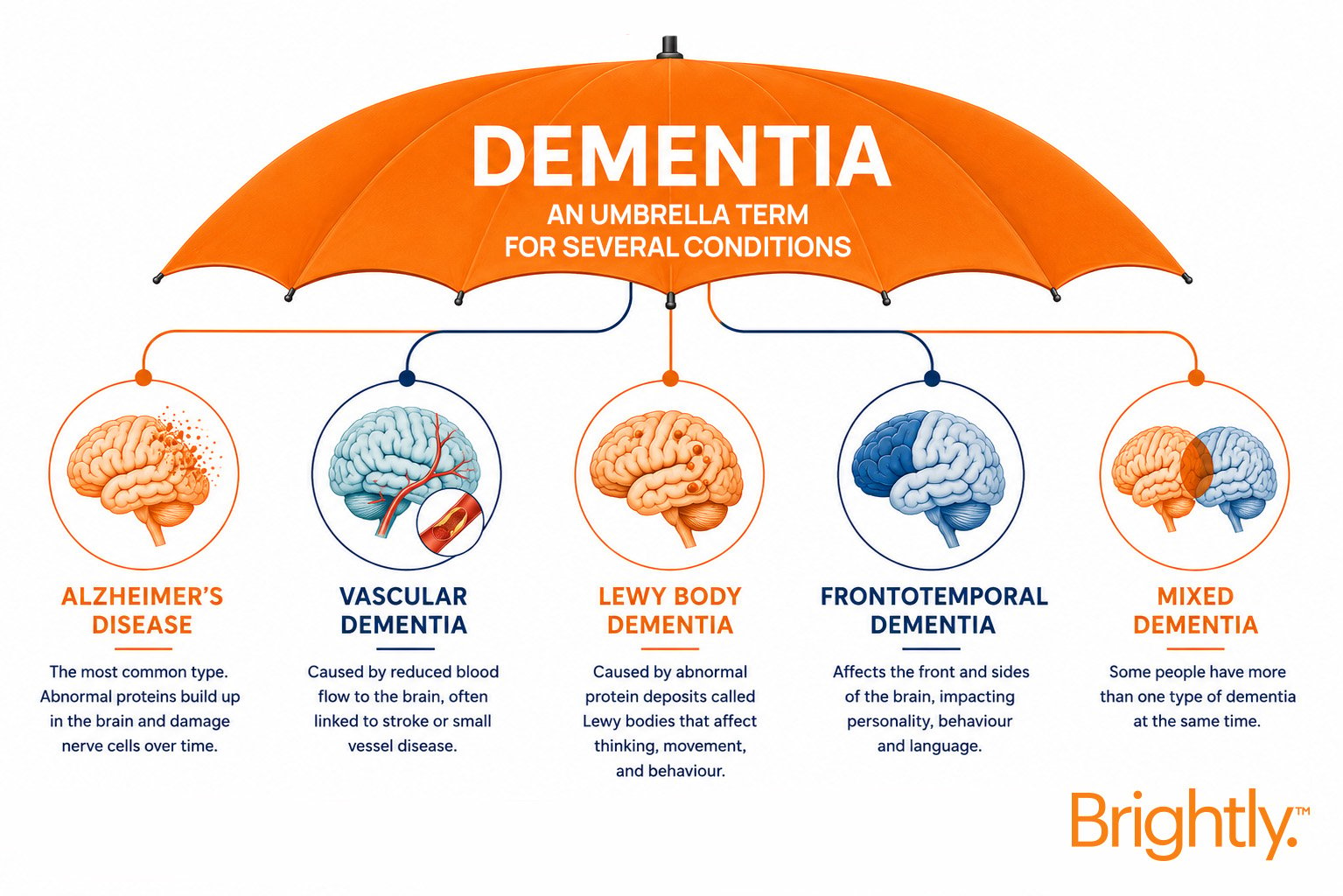
Alzheimer's disease
The most common form, accounting for roughly 60–70% of all dementia. In Alzheimer's, abnormal proteins — amyloid beta and tau — are deposited into neurons, gradually damaging them until they stop working.

Crucially, this process begins long before any symptoms appear. Dr. Johnson estimates it may start 10 to 20 years before a person notices anything wrong.
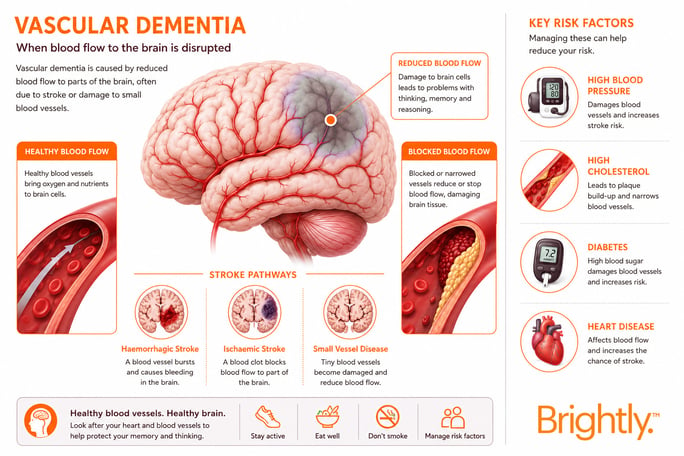
Vascular dementia
Caused by a single stroke or a series of smaller strokes in the brain, which interrupt blood supply to brain tissue. It's the second most common type, and managing cardiovascular risk factors — blood pressure, cholesterol, diabetes — is directly relevant to reducing risk.
Dementia with Lewy body
Lewy body dementia sits on a spectrum with Parkinson's disease. Both involve a protein called alpha-synuclein being deposited into neurons, though they present differently.
People with Parkinson's typically experience motor symptoms first — tremors, shuffling gait. People with Lewy body dementia more often have memory problems and hallucinations early on, and may also show some Parkinson's-like movement symptoms.
It's worth knowing that this type responds particularly well to medication.
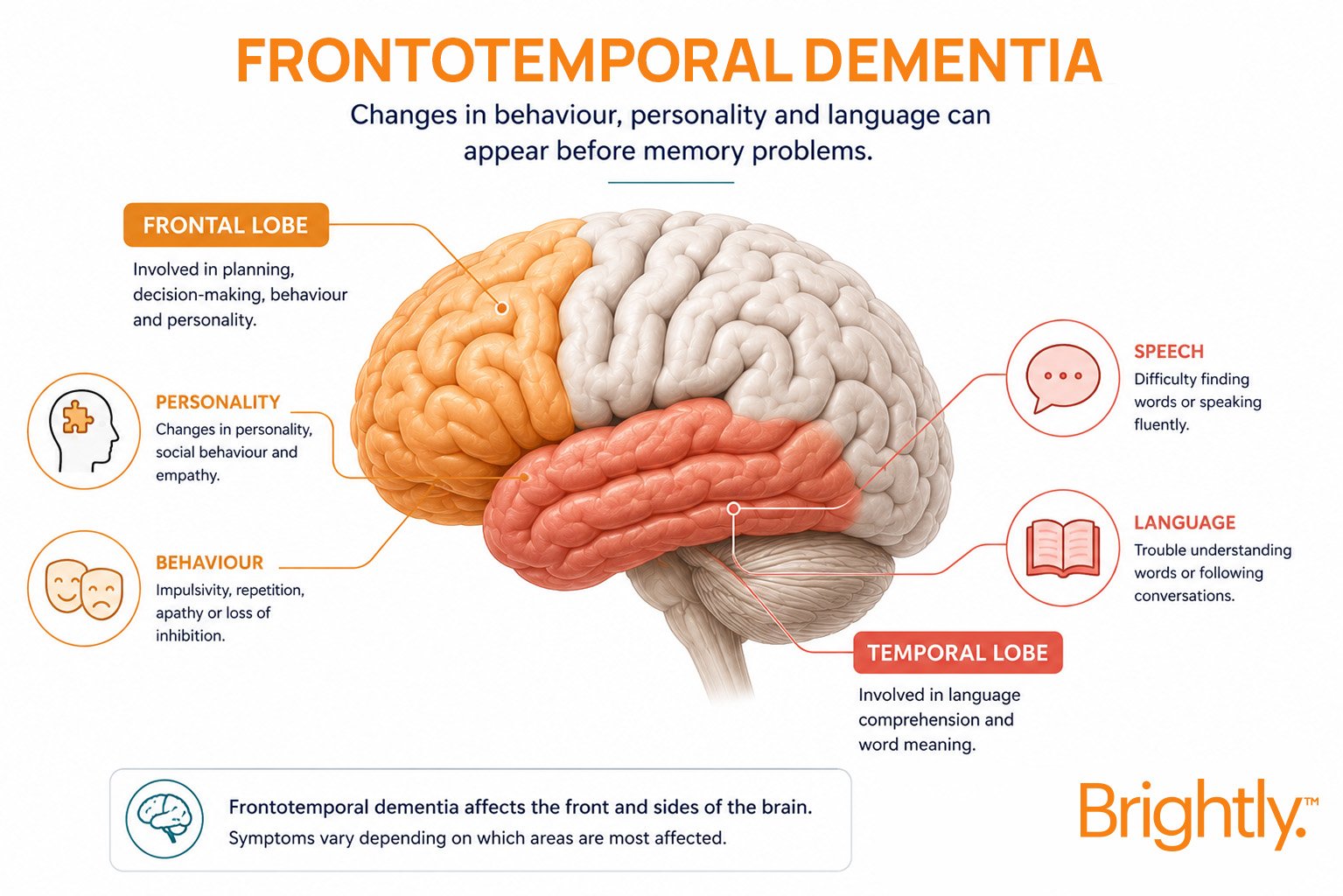
Frontotemporal dementia
This affects the front and sides of the brain — the regions involved in personality, behaviour, and language. It can look different from Alzheimer's, with changes in behaviour or speech sometimes appearing before memory problems.
Less common causes
Dr. Johnson also notes that Huntington's disease, multiple sclerosis, motor neuron disease, HIV, and Creutzfeldt-Jakob disease can all cause forms of dementia — though these are significantly less common.
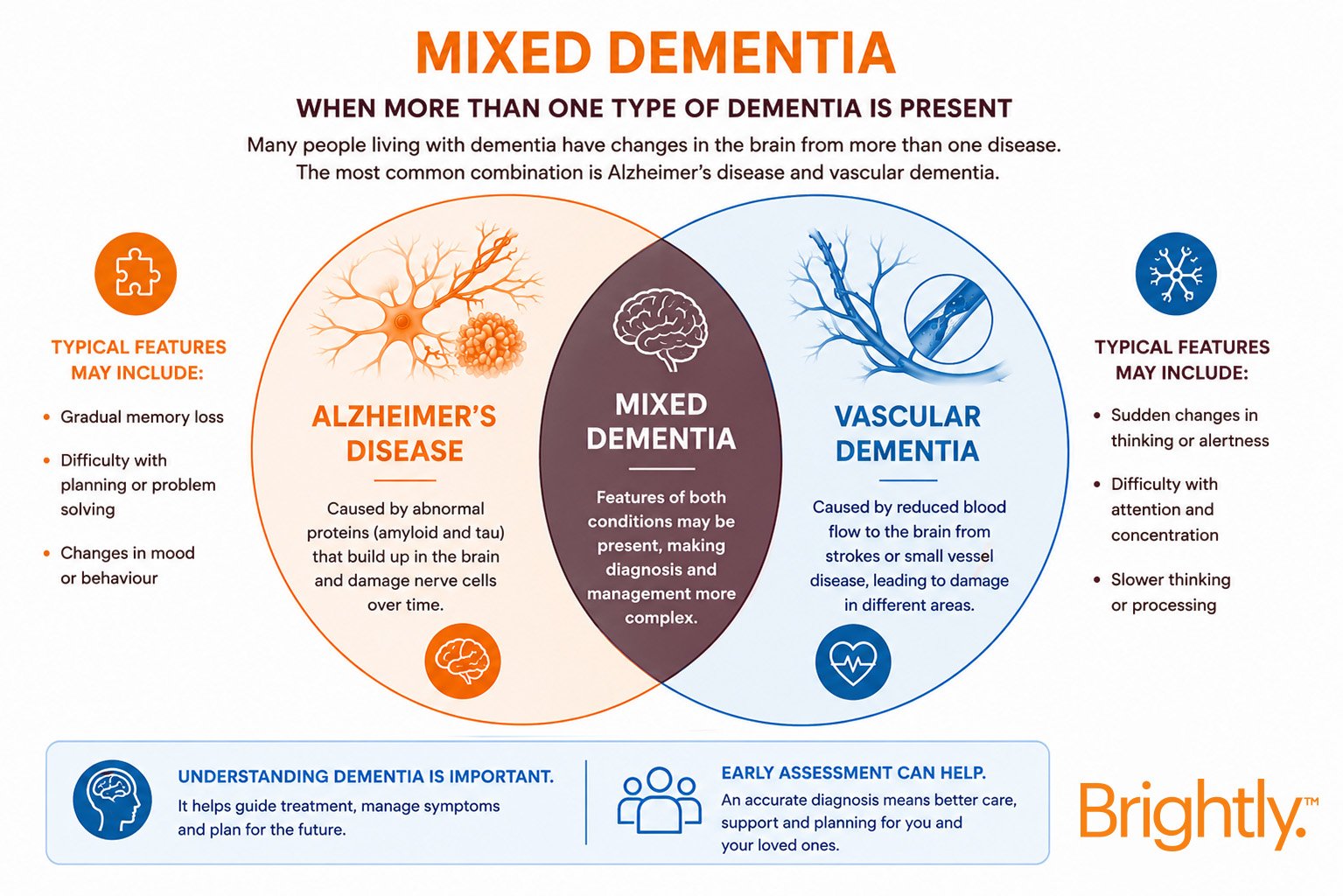
Mixed dementia
Some people have more than one type simultaneously. A person might have both Alzheimer's and vascular dementia, for example, which can make diagnosis more complex and sometimes means the presentation doesn't fit neatly into one category.
Why the distinction matters
Different types of dementia have different causes, different trajectories, and — importantly — different treatment responses. Getting the right diagnosis isn't just about giving something a name. It shapes every decision that follows: whether medication is appropriate, which medication, what to watch for, and how to plan ahead.
"I think of dementia as a sort of umbrella," Dr. Johnson says, "and underneath that is a whole lot of different disorders."
Understanding which one you're dealing with is where good care begins.