What is whole-of-person wellbeing? Why your health is more than just check-ups
Contents
Ageing well isn’t about ticking off annual check-ups or reacting when something goes wrong. It’s about understanding your health as an interconnected system. One where physical strength, cognitive function, emotional wellbeing, safety, and lifestyle choices all work together. This is the foundation of the Brightly philosophy: whole-of-person wellbeing.
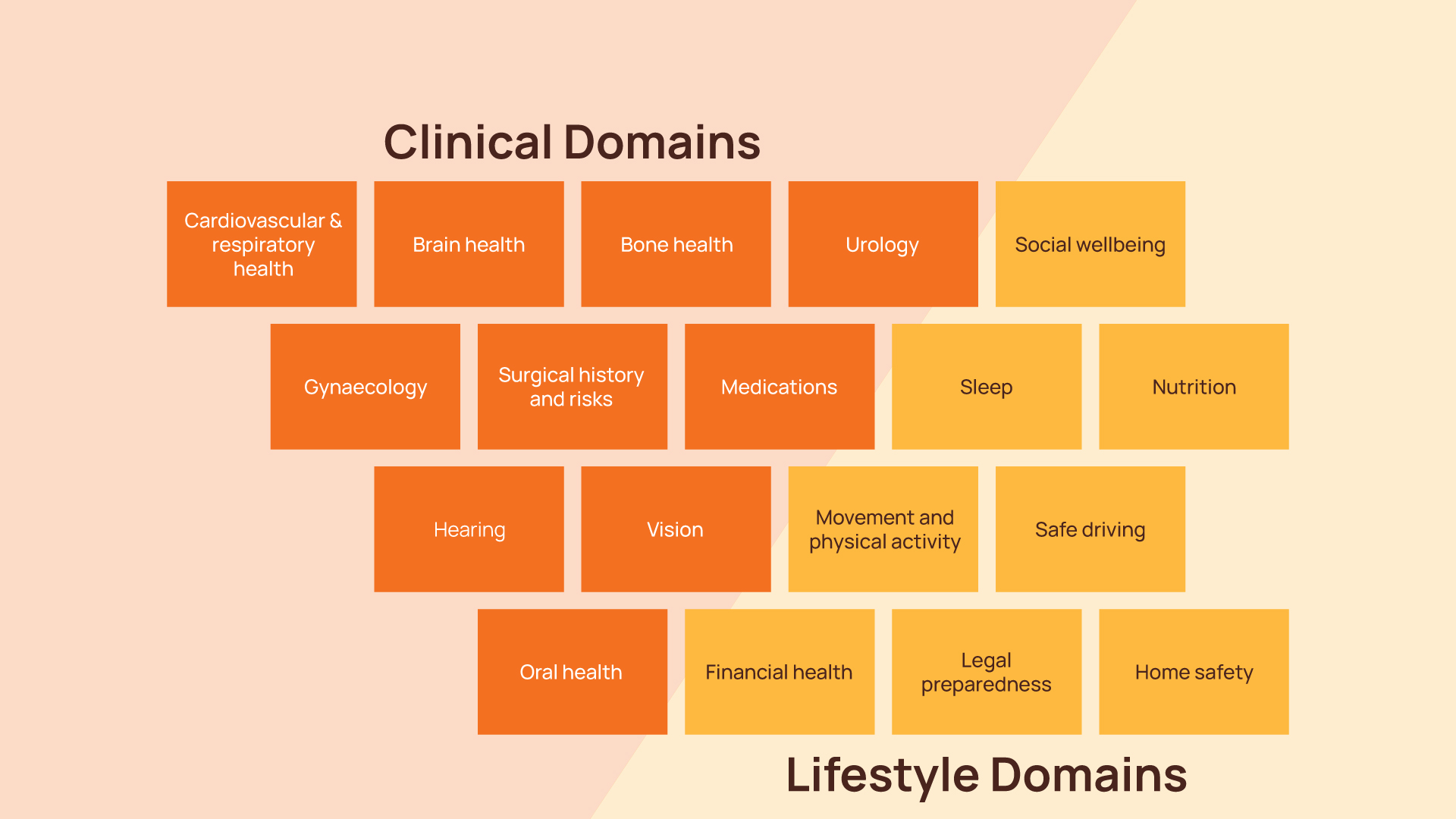
Whole-of-person wellbeing looks beyond symptoms or isolated health conditions. Instead, it recognises that ageing well requires proactive attention across 18 essential domains of health. When these domains are supported together, people maintain independence longer, enjoy better quality of life, and feel more confident navigating the journey of growing older.
In this introductory guide, we break down what whole-of-person wellbeing means, why it matters, and how each of the 18 domains contributes to a brighter, healthier future.

Why whole-of-person wellbeing matters
As we age, changes rarely happen in isolation. A small loss of balance can affect confidence walking outdoors. Poor sleep can reduce cognitive sharpness. Untreated hearing loss can lead to social withdrawal. Medication issues can cause confusion or increase the risk of falls. These ripple effects show how deeply connected our health systems are.
Whole-of-person wellbeing helps us:
-
Identify issues earlier, before they lead to loss of independence.
-
Build resilience across physical, mental, and social health.
-
Personalise care, because every person’s needs are different.
-
Stay proactive, not reactive.
By understanding and supporting all 18 domains, we look at ageing not just as a stage of life to manage, but one to optimise.
The 18 domains of health in the Age Brightly philosophy
1. Strength, Mobility & Balance
These are the cornerstones of independence. Strong muscles, fluid movement, and good balance reduce falls, support everyday activities, and keep you moving confidently. Changes in these areas can happen gradually — often showing up first as stiffness, slower movement, or reduced confidence when walking. The good news is that with the right exercises and support, strength, mobility, and balance can improve at any stage.

2. Bone Health & Falls Risk
Bone density can decline over time without obvious symptoms, meaning conditions such as osteoporosis may only become apparent after a fracture. Falls can also result from a range of factors including medications, vision changes, and hazards in the home. Understanding your bone health and proactively reducing falls risk — through optimising bone strength, reviewing medications, and addressing environmental risks — can dramatically improve long-term safety and independence.
3. Pain (Arthritis)
Chronic pain — particularly from arthritis — can significantly affect your ability to move comfortably and carry out everyday activities. It may develop gradually, ranging from mild discomfort to more persistent symptoms, and can lead to reduced activity, disrupted sleep, and low mood. Identifying and managing pain early helps maintain mobility, independence, and quality of life. With the right approach, including movement, lifestyle strategies, and appropriate treatments, pain can often be reduced and better controlled.
4. Mind Health (Cognition, Mood & Memory)
Mind health encompasses memory, thinking, and emotional wellbeing — all essential for independence and quality of life. Changes in these areas can be early signs of conditions such as mild cognitive impairment, dementia, depression, or anxiety. Importantly, many contributing factors are potentially reversible or modifiable, including medications, sleep, nutrition, and underlying medical conditions. Early identification creates the greatest opportunity to maintain cognitive function and support emotional wellbeing.
5. Sleep
Good sleep is essential for physical health, cognitive function, and emotional wellbeing. It supports memory, concentration, mood, and energy levels. Changes in sleep patterns are common with age — including difficulty falling asleep, staying asleep, or feeling unrefreshed — and can contribute to fatigue, reduced concentration, and an increased risk of falls. Identifying and addressing sleep issues early can meaningfully improve overall health and quality of life.
6. Nutrition and Diet
Good nutrition is fundamental to maintaining strength, energy, and overall health. A balanced diet supports muscle mass, bone health, immune function, and recovery from illness. Changes in appetite, weight, or eating habits can happen over time and may lead to undernutrition or unintended weight gain. Ensuring adequate intake of key nutrients, fluids, and energy supports your ability to stay active, maintain independence, and manage health conditions effectively.

7. Social Wellbeing
Social wellbeing plays a vital role in mental and physical health. Staying connected with family, friends, and community supports emotional wellbeing, cognitive function, and a sense of purpose. Reduced social contact or feelings of loneliness can develop gradually and are associated with increased risk of depression, cognitive decline, and poorer physical health outcomes. Maintaining and strengthening social connections helps support resilience, independence, and enjoyment of daily life.
8. Medication Optimisation & Safety
Many older adults take multiple medications, which can increase the risk of interactions, side effects, and complications such as dizziness, confusion, or falls. Regular medication reviews ensure you are taking the right medicines, at the right dose, and only those that are necessary. Optimising medications can improve how you feel, reduce the risk of harm, and support your ability to carry out daily activities safely and confidently.

9. Cardiovascular & Respiratory Health
Healthy heart and lung function are essential for delivering oxygen and nutrients throughout your body, supporting energy levels, physical function, and overall wellbeing. Conditions such as high blood pressure, heart disease, or chronic lung conditions can develop gradually and may not cause obvious symptoms in the early stages. Regular monitoring and early management of risk factors — including blood pressure, cholesterol, smoking, and physical activity — can significantly reduce the risk of serious complications and support long-term independence.
10. Urinary Health
Bladder symptoms are common but often underreported — and they are not an inevitable part of ageing. Whether it's urgency, incontinence, frequent nighttime waking, or difficulty with flow, urinary symptoms can affect daily activities, limit social engagement, disrupt sleep, and increase the risk of falls. There are effective options available, including pelvic floor exercises, lifestyle changes, and medical support. Addressing symptoms early can help you stay active and confident.
11. Bowel Health
Good bowel health is important for comfort, dignity, and overall wellbeing. Changes in bowel habits — such as constipation, diarrhoea, or incontinence — can impact confidence, social engagement, and quality of life, and may be associated with underlying conditions, medications, or dietary factors. Early identification and management, including adjustments to diet, fluids, activity, and medications, can improve symptoms and prevent further complications.
12. Vision
Good vision is essential for safety, independence, and quality of life. Clear eyesight supports everyday activities such as reading, driving, recognising faces, and moving confidently around your home and community. Changes in vision often occur gradually and — even when subtle — can increase the risk of falls and make daily tasks more challenging. Regular eye checks are important for detecting conditions such as glaucoma, cataracts, and macular degeneration early, often before symptoms are noticeable.
13. Hearing
Good hearing is important for staying independent, safe, and socially connected. Hearing changes can make conversations and everyday sounds harder to understand, affecting communication and participation in daily life. Early identification and support helps preserve hearing, maintain social engagement, and reduce the cognitive strain of processing sound — supporting both safety and overall wellbeing.
14. Oral Health
Good oral health is essential for overall health, comfort, and quality of life. Healthy teeth and gums support your ability to eat well, speak clearly, and enjoy a varied diet — which is important for maintaining good nutrition. Changes in oral health can occur gradually, and problems such as gum disease, tooth decay, or poorly fitting dentures can lead to pain, difficulty eating, and reduced appetite. Poor oral health is also linked to other conditions, including cardiovascular disease. Regular dental care and early identification of any issues help prevent complications and maintain function.
15. Safe Driving
Driving is closely linked to independence, mobility, and staying connected with your community. It relies on a combination of physical ability, vision, reaction time, and cognitive function — and changes in any of these areas can affect road safety, often gradually and without obvious warning signs. Regularly reviewing your driving ability and addressing any concerns early helps ensure you can continue to drive safely for as long as possible, while keeping you and others safe.
16. Home & Environment Safety
Your home environment plays a key role in supporting your safety and independence. Hazards such as poor lighting, uneven surfaces, or unsafe bathroom and kitchen setups can increase the risk of falls and injuries — and these risks may become more significant as mobility, vision, or balance change over time. Identifying and addressing potential risks early, including simple modifications and adjustments, can make a meaningful difference in helping you stay safe and comfortable in your own home.
17. Legal Planning
Planning ahead helps you maintain control over your health, wellbeing, and personal affairs. Having the right legal arrangements in place — including an up-to-date Will, Enduring Powers of Attorney (for both personal care and property), and an Advance Care Plan — ensures your wishes are clearly understood and respected, even if you are unable to make decisions in the future. Putting these in place early provides clarity for your family, reduces stress during difficult times, and ensures decisions are made by people you trust.
18. Financial Planning
Financial wellbeing supports access to care, lifestyle choices, and long-term independence. Changes in health, living arrangements, or unexpected expenses can place pressure on your finances, and without a plan in place this can lead to stress and reduced choices. Taking time to review and plan your finances helps ensure your resources are aligned with your goals and priorities, and supports informed decision-making about your lifestyle, care, and future needs.

How the domains work together
Whole-of-person wellbeing means understanding how each domain influences the others. For example:
-
Poor mobility increases falls risk, which may require medication changes, which may affect cognition.
-
Hearing loss can lead to social isolation, impacting mood, cognitive health, and sleep.
-
Chronic pain reduces physical activity, causing muscle loss and lower bone density.
This interconnected approach is at the heart of Brightly’s model: seeing the whole person, not the symptom.
The Brightly difference
Brightly brings together health expertise, proactive screening tools, and practical guidance to help people take control of their ageing journey. Our whole-of-person framework means we don’t just look at one part of your health – we look at everything that contributes to living well, confidently, and independently.
Ageing brightly isn’t about luck. It’s about informed action, the right support, and a holistic understanding of what wellbeing truly means. Ready to learn more? Explore each of the 18 domains in depth and start building your personalised path to ageing well with a Baseline+ Whole-of-person Assessment.