Is dementia an inevitable part of ageing?
Contents
Dementia is one of the most feared health conditions associated with growing older. But the good news is that it is not an inevitable part of ageing. While age increases risk, decades of research now show that many of the factors influencing cognitive decline are modifiable. This means there is a great deal you can do to protect your brain, strengthen your resilience, and age well.
In this blog, informed by insights from Brightly's Clinical Psychologist, Dr. Susan Yates, we explore what dementia is, how it differs from normal ageing, and the practical steps you can take to reduce risk.

Dementia is not a normal part of ageing
Although memory lapses become more common as we get older – such as occasionally forgetting names, misplacing items, or needing more time to retrieve information – these changes do not interfere with daily life and are considered part of normal cognitive ageing.
“Dementia is not an inevitable part of ageing. While age is a risk factor for developing dementia, there are a number of modifiable risk factors. This means there are lifestyle changes, including management of health conditions, which can reduce your risk and keep your brain and body as healthy as possible.”
— Dr. Susan Yates, Clinical Psychologist
Dementia, by contrast, is a group of neurodegenerative diseases characterised by significant impairments in memory or cognition that do affect day‑to‑day function. The most common types include Alzheimer's disease, vascular dementia, mixed dementia, frontotemporal dementia and dementia with Lewy bodies.
The key message is clear: not everyone will develop dementia. And for most people, meaningful lifestyle changes can reduce risk.
Modifiable dementia risk factors
The Lancet Commission (2024) identifies 14 modifiable risk factors that together account for around 45% of dementia risk:
-
Less education
-
Hypertension (high blood pressure)
-
Obesity
-
Smoking
-
Physical inactivity
-
Excessive alcohol use
-
Hearing loss
-
Depression
-
Social isolation
-
Vision loss
-
Diabetes
-
Air pollution
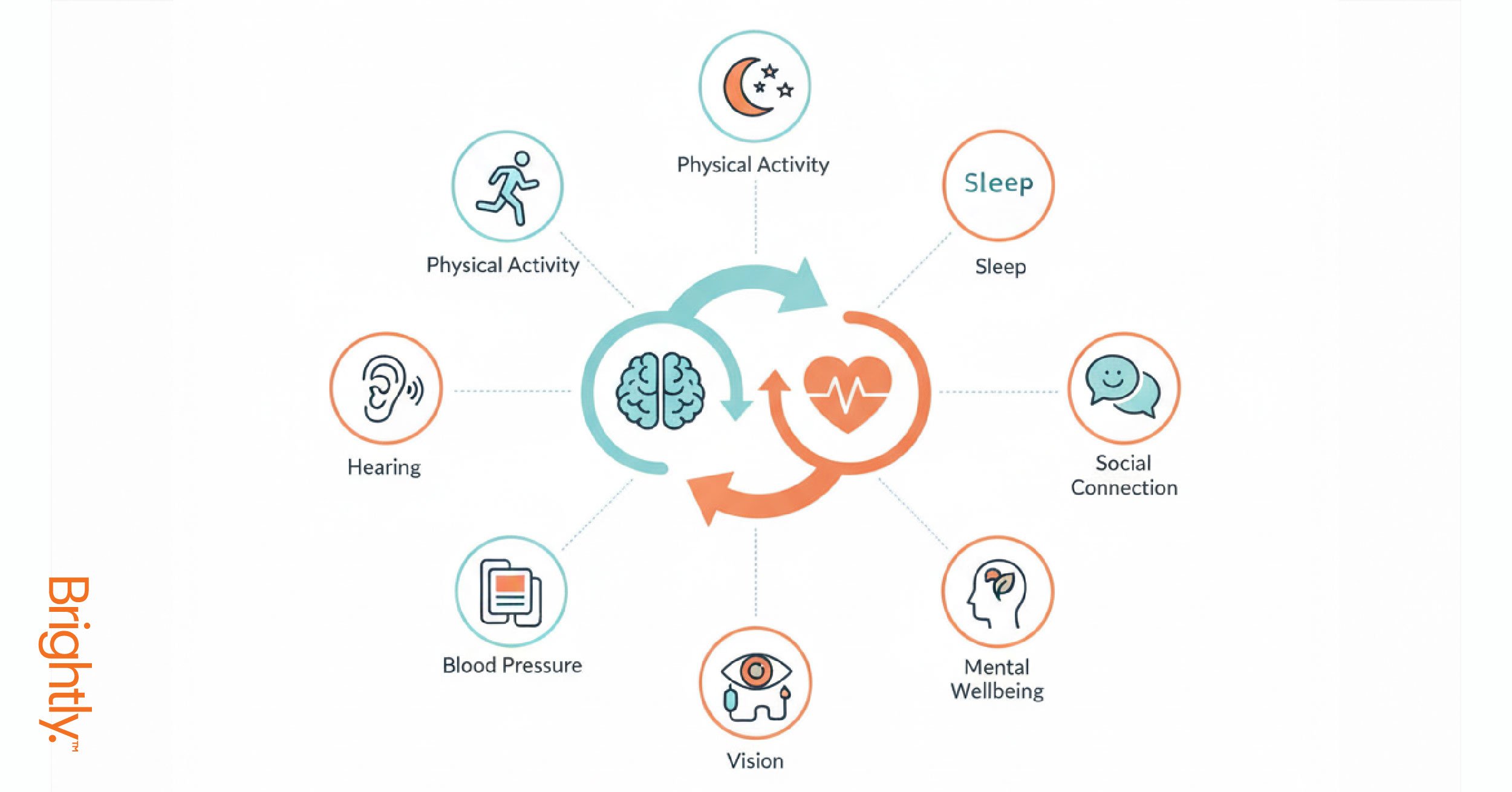
These factors reinforce a powerful principle: what’s good for your heart is good for your brain.
Early signs: normal ageing vs. Mild Cognitive Impairment vs. dementia
Normal Ageing
You may notice:
-
Slower recall
-
Occasional word‑finding difficulty
-
Misplacing objects from time to time
These changes should not disrupt independence.
Mild Cognitive Impairment (MCI)
MCI describes cognitive difficulties that are noticeable and measurable, but do not significantly interfere with day‑to‑day function. People with MCI often rely more on strategies such as reminders, notes and calendars. MCI increases the risk of developing dementia, but many people never progress to dementia.
Dementia
Dementia involves a significant decline in memory or cognition that does impact daily functioning. This might include difficulty managing finances, cooking, navigating familiar places, or keeping track of appointments.
If you or a loved one is concerned about changes in thinking or memory, it is important to seek assessment early. There can be a number of reversable causes for changes in thinking and memory, not just due to dementia.
Lifestyle factors with the strongest evidence
Research consistently shows that some lifestyle factors have a particularly strong impact on dementia prevention:
-
Hearing loss and high cholesterol are among the biggest contributors to dementia risk.
-
Social isolation and depression also significantly increase risk.
-
Other key contributors include head injury, physical inactivity, air pollution, diabetes, smoking, hypertension, obesity, vision loss and excessive alcohol use.
Staying physically, socially and cognitively active is one of the most powerful protective strategies.
“It is important to stay cognitively, socially and physically active, and to discuss any health issues you have with your medical team to make sure these are as well managed as possible.”
— Dr. Susan Yates, Clinical Psychologist

Movement matters: strength, balance and brain health
Physical activity is strongly linked to better brain health. Exercise may support cognitive function by:
-
Improving heart and blood vessel health
-
Supporting healthy cholesterol and blood pressure
-
Enhancing blood flow to the brain
-
Boosting mood and sleep quality
Strength and balance training are also essential for reducing falls risk, maintaining independence, and preserving mobility: important factors in keeping both brain and body well.
“We tend to lose strength and balance as we age; however, these changes are not fixed or inevitable — you can make lifestyle changes and do strength and balance exercises to keep your body as healthy as possible.”
— Dr. Susan Yates, Clinical Psychologist
The takeaway: regular movement is medicine for your brain.

Sleep: essential brain maintenance
Sleep is far more than rest. It is active brain maintenance. During sleep your brain:
-
Forms and consolidates memories
-
Clears metabolic “waste” and toxins
-
Repairs cells
-
Supports mood regulation
Adults generally need 7–9 hours of sleep each night, though this varies. If you are waking unrefreshed, it may indicate poor sleep quality.

Sleep apnoea and dementia risk
Sleep apnoea causes repeated pauses in breathing during sleep, reducing oxygen supply to the brain. Snoring can be a sign. Growing evidence shows untreated sleep apnoea increases dementia risk, making diagnosis and treatment especially important.
Hearing and vision: protect your senses, protect your brain
Hearing loss is now recognised as the largest modifiable risk factor for dementia. Possible reasons include:
-
Reduced cognitive stimulation
-
Increased social isolation
-
Greater cognitive load (the brain working harder to decode sound)
“Hearing loss is now recognised as the single largest modifiable risk factor for developing cognitive problems and dementia.”
— Susan Yates, Clinical Psychologist
Around one‑third of adults over 65 have some degree of hearing loss. Early assessment and use of hearing aids where appropriate can make a significant difference.
Similarly, correcting vision loss supports cognitive engagement, mobility, confidence and safety.
The bottom line: dementia is not inevitable
While ageing is the biggest non‑modifiable risk factor for dementia, many dementia risk factors are linked to lifestyle and health factors that you can influence.
By protecting your heart, staying socially connected, moving your body, supporting your senses, sleeping well and managing long‑term conditions, you can meaningfully reduce your risk, at any age.
At Brightly, we believe in empowering older adults to build and sustain whole‑of‑person wellbeing. Keeping your brain healthy is a lifelong journey, and it’s never too late to begin.
Want personalised guidance? Explore Brightly’s evidence‑based programs to support strength, cognition, balance, sleep and whole‑of‑person wellbeing.